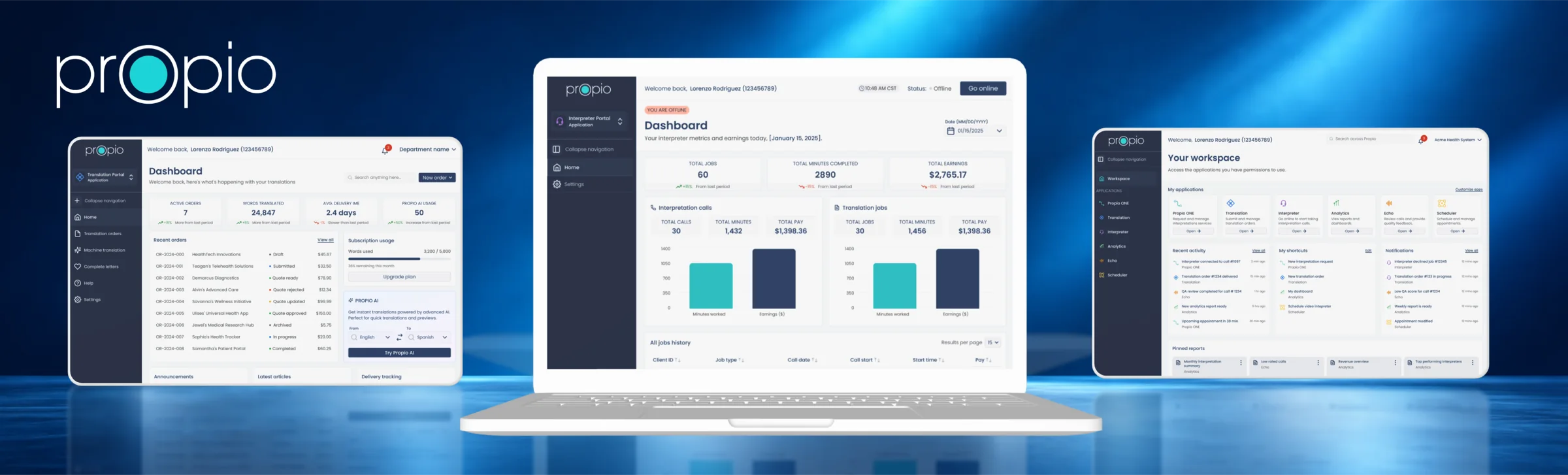
Propio platform concept showing Translation Portal, Interpreter Portal, and the unified workspace

Platform StrategyDesign SystemsUX Leadership

From fragmented products to a scalable platform

Creating the design system, product architecture, and UX strategy to bring six enterprise products into one connected Propio ecosystem.

Role
Lead product designer
Scope
Platform strategy, design systems, product architecture
Products
Propio One, Translation, Interpreter, Scheduling, Analytics, Echo
Company
Propio

The Challenge

Propio’s products had grown independently over time. Each product had its own UI patterns, components, navigation, and approach to users and access. Similar experiences were designed and built differently across products, and sometimes within the same product.

As major redesigns began, the work revealed a bigger platform problem: improving individual products would not be enough. Propio needed a shared foundation that could make each product feel connected without forcing every workflow into the same mold.

Scaling the System

The first design system solved the immediate web product need, but I knew it would eventually need to support a broader ecosystem. Tokens were embedded inside the web library, which worked until the system needed to expand into mobile.

As the design team grew, we separated primitive and semantic tokens into a shared foundation, moved assets into their own library, and allowed web and mobile libraries to use the same underlying design language.

V1

Web Design System

Tokens Assets Components
→

V2

Shared Foundation

Primitive + semantic tokens Shared assets Web + mobile libraries

Foundation First

Decision 01

Start with the system, not the screens

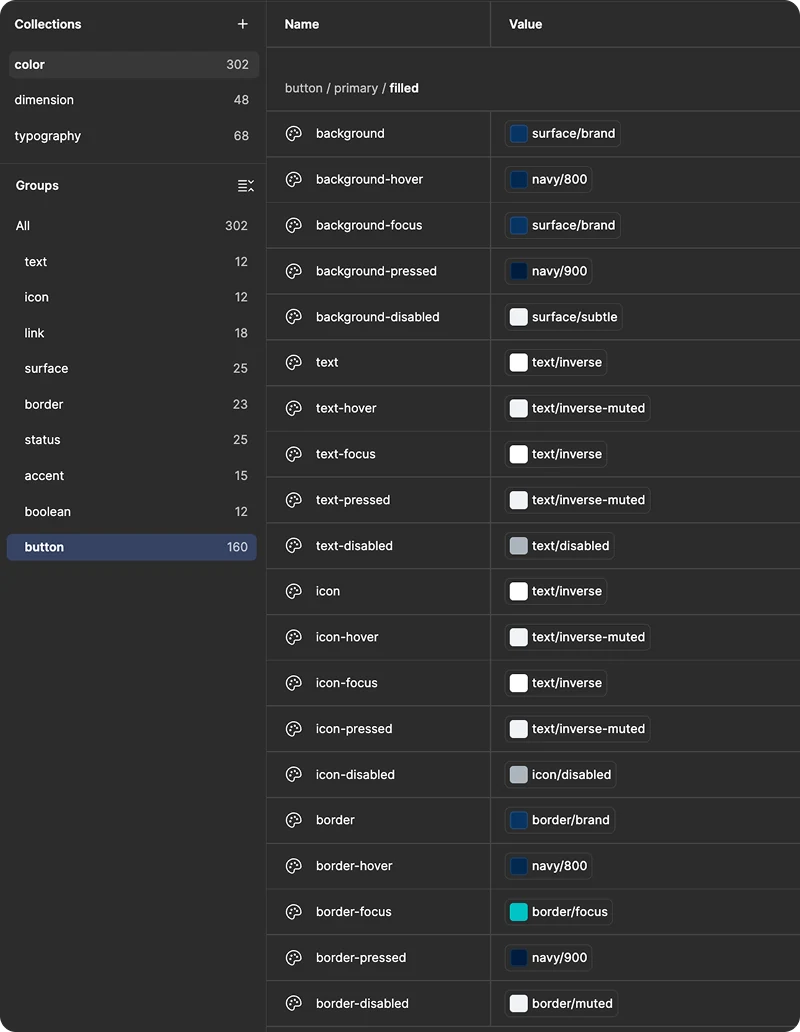
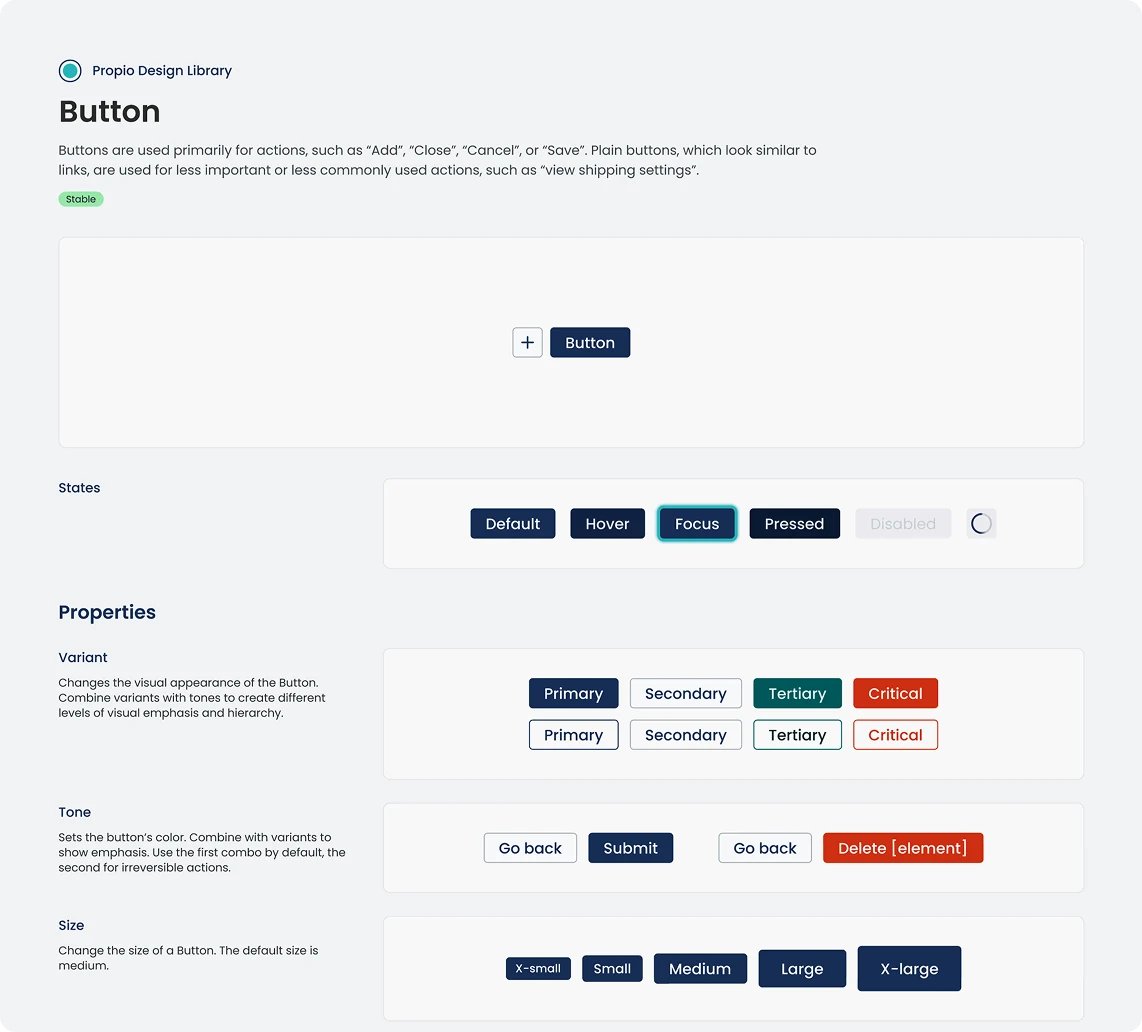
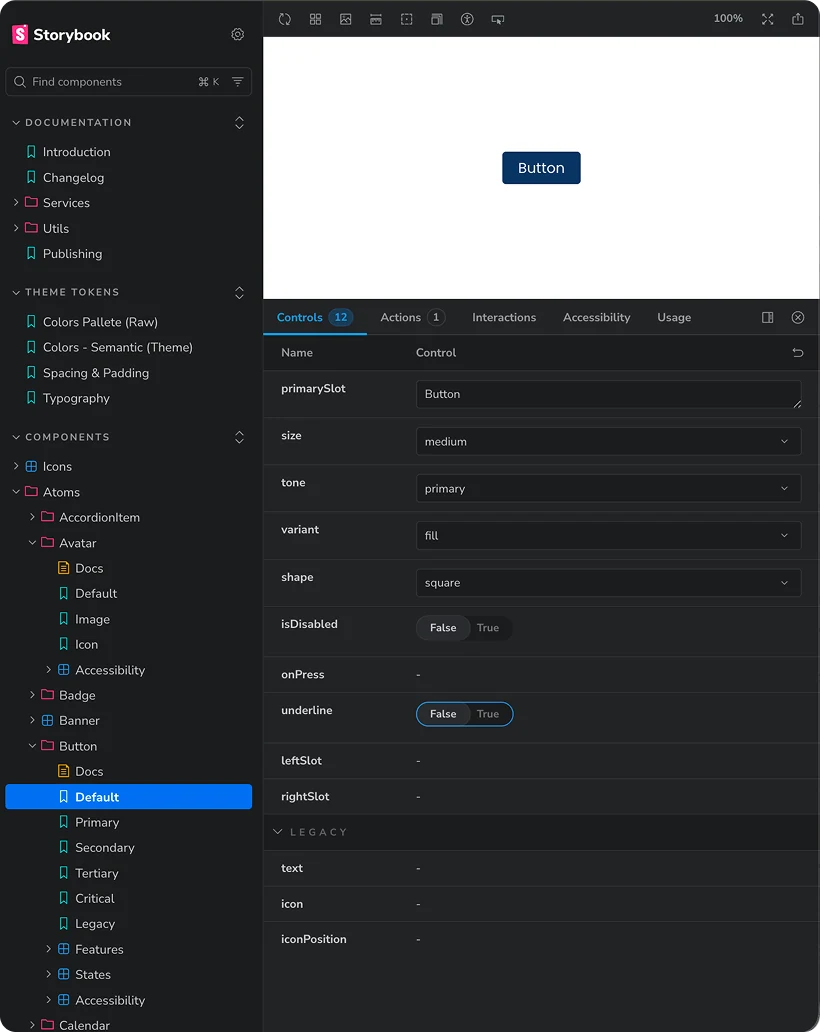
The design strategy was to solve the foundation first, then let product screens inherit the same patterns. I built the web design system alongside active product work, reducing design and engineering debt while teams continued shipping.

Propio design system tokens in Figma Propio design system button documentation Propio Storybook implementation for button components

Decision 02

Create one entry point for the ecosystem

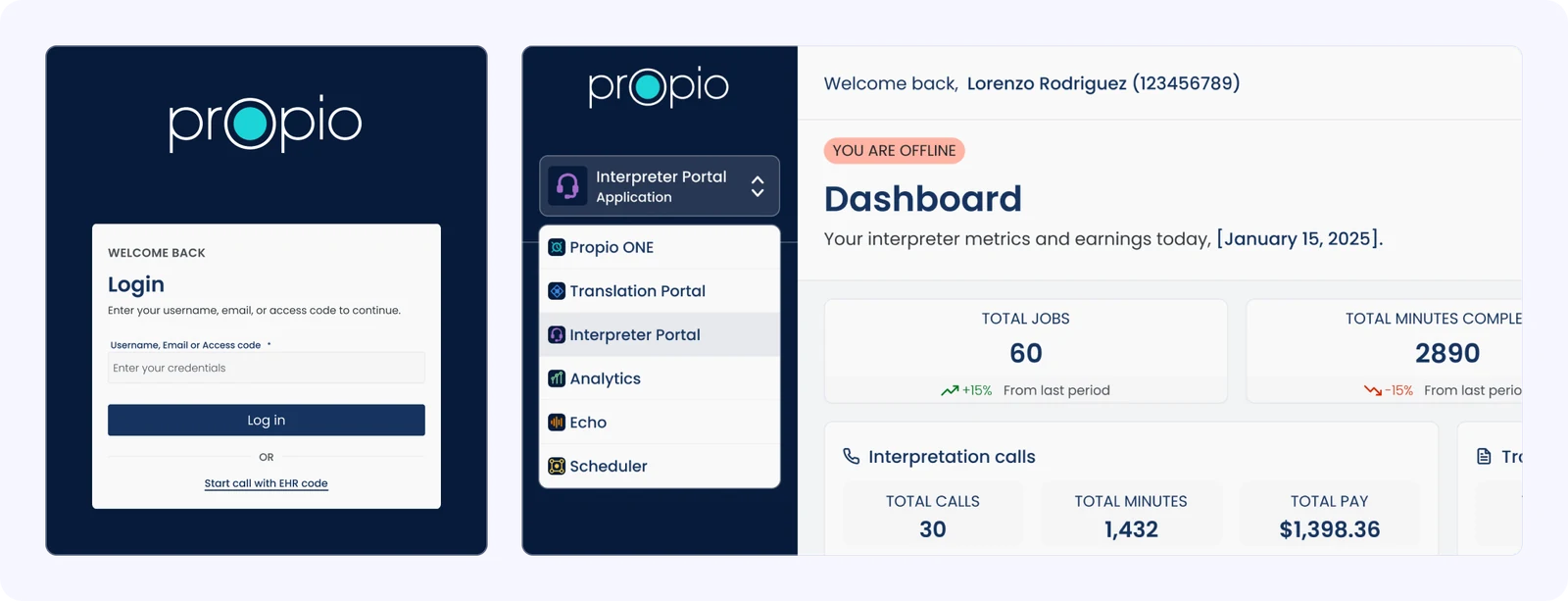
Part of the MegaApp strategy was standardizing access. Instead of asking users to remember a different URL for every product, I designed a single login experience with SSO and a shared product App Switcher. After signing in, users could eventually navigate to the different apps they had access to from one consistent place.

Propio unified login and product switcher concept showing one entry point with SSO and access to multiple applications

30+

Foundational components

~30%

Faster engineering delivery

6

Products moving toward one experience

Web + Mobile

Systems built from shared tokens

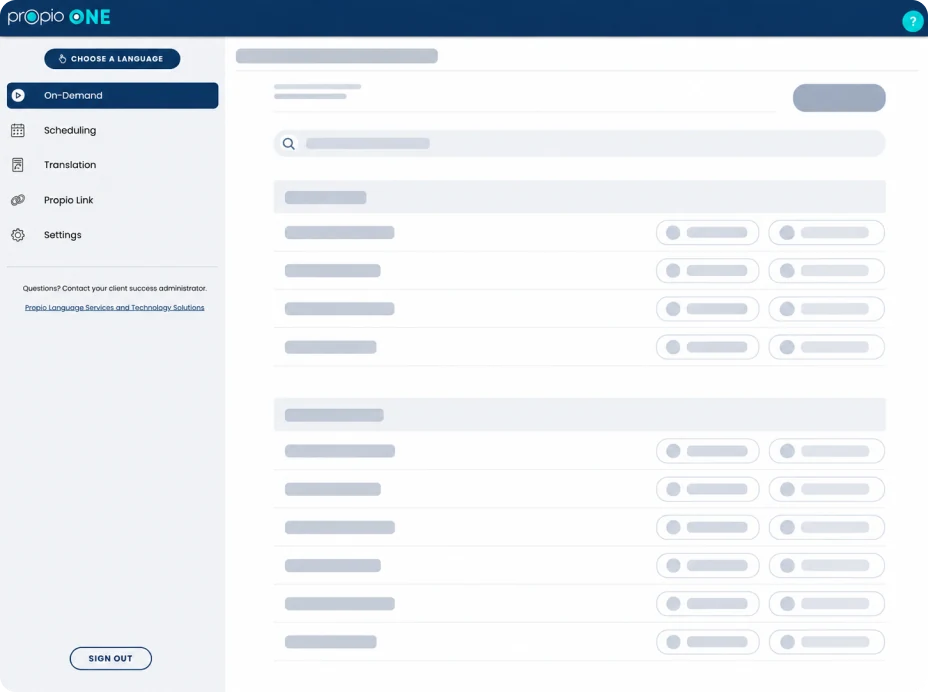
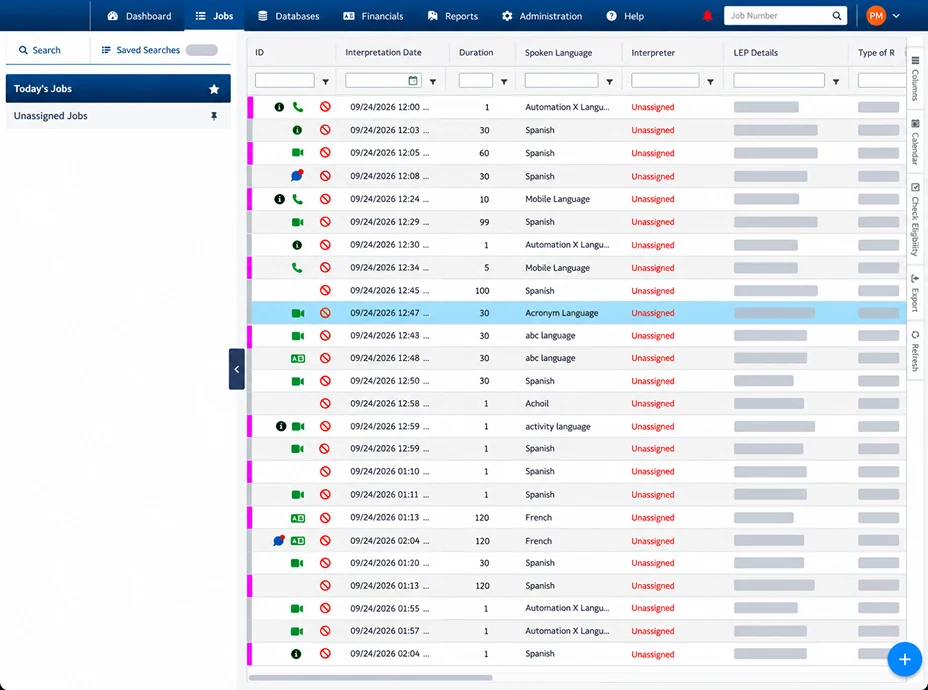
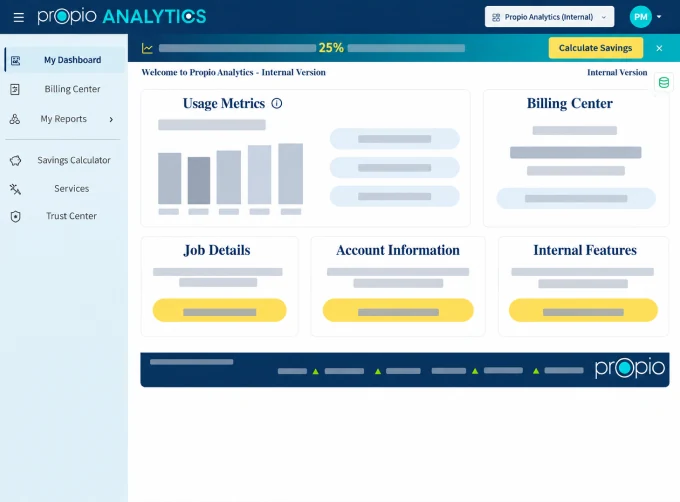
The fragmentation went beyond two applications

The need for a shared system became clearer when looking across the wider product ecosystem. Each application had evolved independently, with its own navigation, components, and interaction patterns. To create a connected experience, we needed to move beyond one-off redesigns and establish a system that could scale across the entire platform.

Proof Through Products

Translation Portal and Interpreter Portal became the clearest proof points for the platform direction. Each product served a different workflow, but the redesigns showed they could share navigation, components, interaction patterns, and visual language without losing what made each product specific.

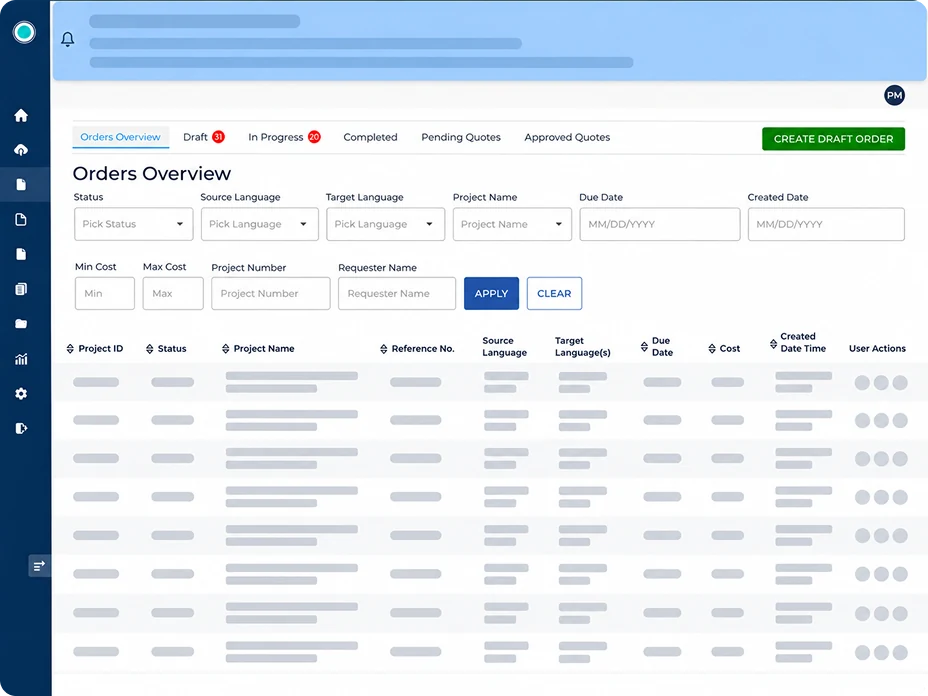
Translation Portal before redesign
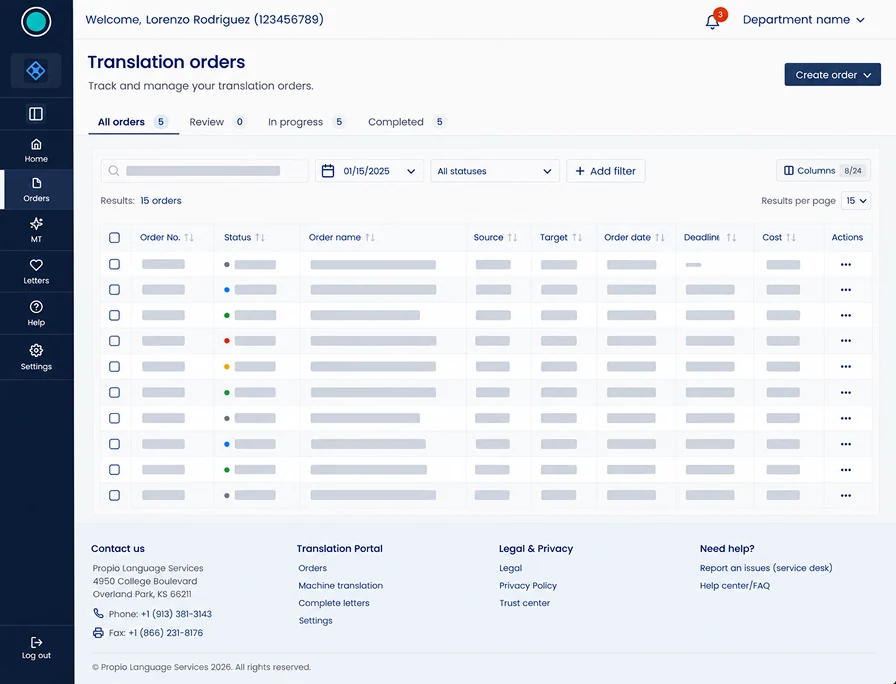
Translation Portal after redesign

Before / after

Translation Portal

The legacy Translation Portal relied on dense tables, inconsistent controls, and product-specific navigation. The redesign introduced shared navigation, reusable components, and interaction patterns that simplified complex translation workflows and helped establish the foundation for the unified platform.

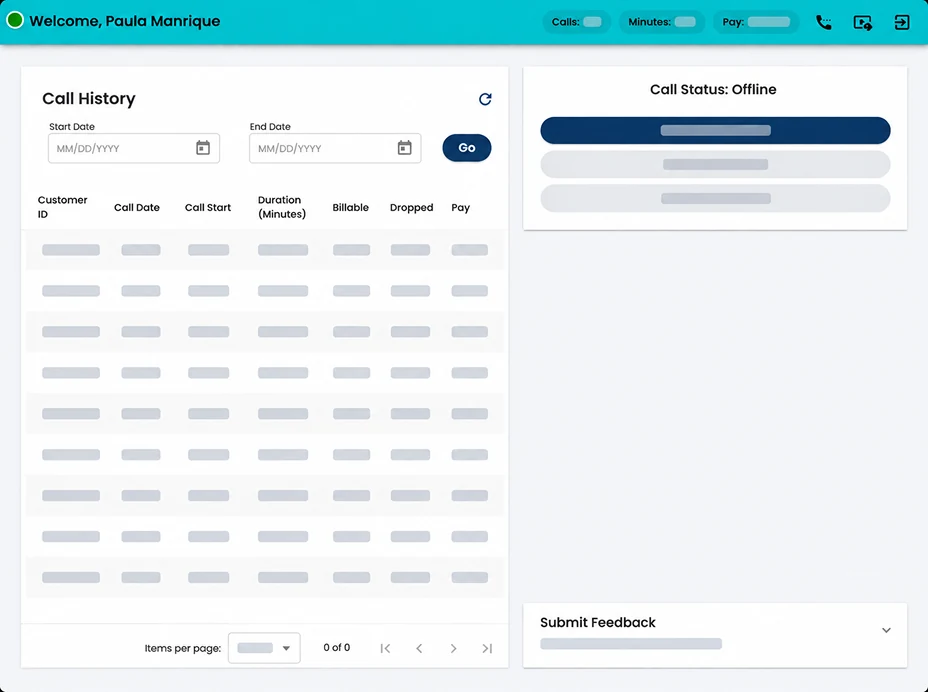
Interpreter Portal before redesign
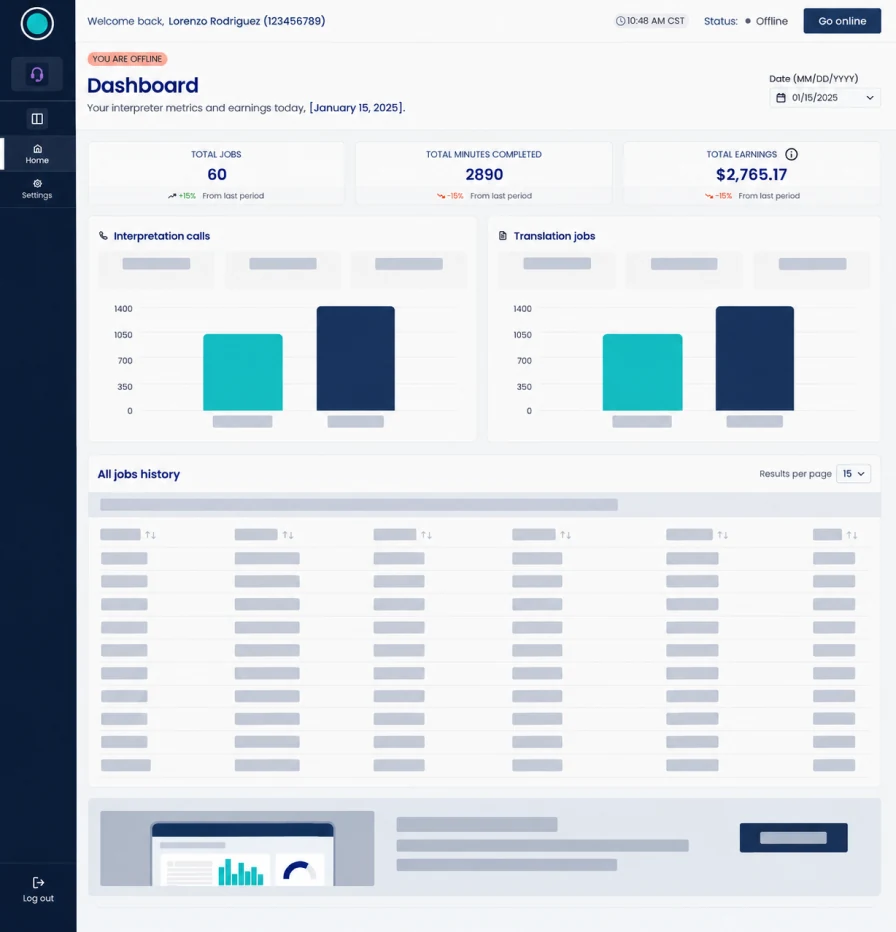
Interpreter Portal after redesign

Before / after

Interpreter Portal

The legacy Interpreter Portal had its own navigation, visual language, and page structure. The redesign brought it into the shared product system with consistent navigation and components, while preserving the workflows, status, and performance information unique to interpreters.

Beyond Consistency

Making products look consistent was not enough. A unified platform needed a shared way to think about organizations, users, product access, roles, and permissions. Without that model, each product would continue to define users differently.

01

One identity across the ecosystem

A user should not need to exist independently within every product.

02

Access before roles

First determine which products a user can access, then what they can do.

03

Product-specific roles where needed

Responsibilities in Translation may be different from Scheduling or Analytics.

Maria Gomez

Example user

External client at Mercy Hospital, Emergency Department

Organization User Product access Product role Permissions

Product access

Translation

Role
Manager
Can do
Create orders, edit orders, assign linguists

Product access

Analytics

Role
Viewer
Can do
View dashboards, view reports, export reports

The Path Forward

Bringing six applications into one ecosystem at once was not realistic. I created a two-phase strategy that let teams keep shipping while moving toward the same platform direction.

Today

Independent products

Different experiences Different architecture

Phase 1

Standardize

Shared design system Shared patterns Shared platform services

Phase 2

Unify

One platform One workspace Multiple products

Future State

One platform does not mean one giant product

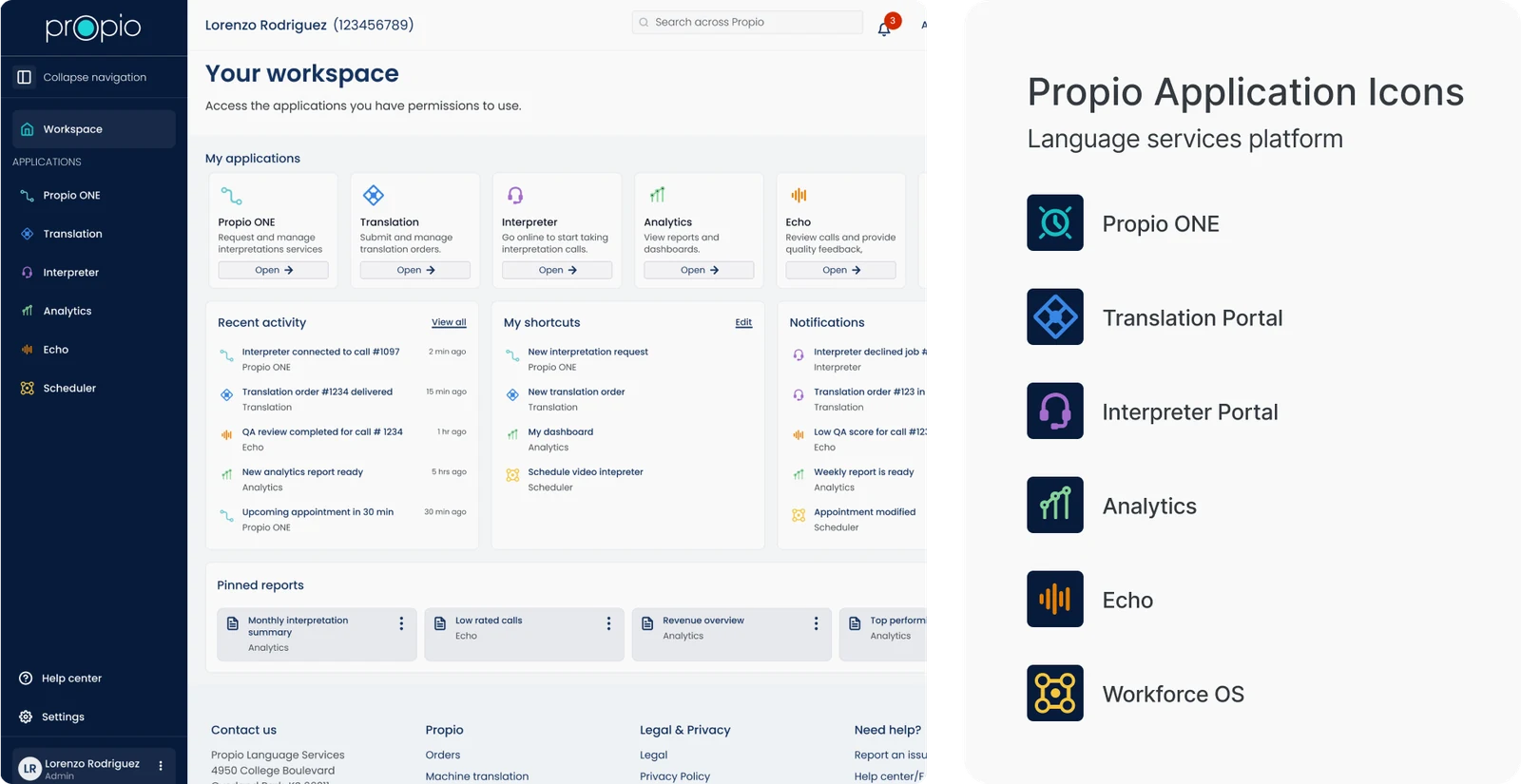
The platform should own shared services like organizations, users, roles, authentication, notifications, search, settings, help, and app switching. Products should keep the specialized workflows and business logic that make them valuable.

Unified Propio workspace with application cards and Propio language services platform icons

Leadership Outcome

I started this transformation as Propio’s first product designer. Today, the platform direction is scaling through the design team. I lead two product designers who are redesigning WFOS and the mobile Interpreter app while extending the web and mobile design libraries.

I continue to supervise the work, helping ensure each experience reuses shared patterns, stays aligned to the broader UX vision, and still makes room for the nuances of each product’s users, workflows, and goals.

Started with

1 designer

30+ components Web foundation 2 major redesigns

Scaled to

Design team

Web + mobile systems Shared tokens Common platform direction

Where We Are Today

2

Major product redesigns in implementation.

6

Products aligned to one platform direction.

2 designers

Helping scale the system and product vision.

Reflection

What started as a design system initiative became a broader transformation of how Propio approaches its product ecosystem. I did not set out to make six products simply look more consistent. I created the foundation for them to eventually work as one platform. That shared foundation reduced duplicated design decisions across product teams and helped accelerate redesign work across web and mobile.

Interested in this project?

I’m happy to walk through the strategy, system architecture, and product decisions behind the work.

Contact me